


Welcome to The Grey Zone, interview edition! My hope with this series is to highlight and normalize the internal, often unspoken parts of the transformation process that living, writing and publishing a memoir requires of us.
Below is an interview with Lisa Cheek, author and former film and television editor known for her humorous, candid writing about relationships and identity. Her debut memoir, Sit, Cinderella, Sit, was a People Magazine pick, an Amazon bestseller, a Next Generation Indie Book Award finalist, and was named one of Zibby Media’s Most Anticipated Books of 2025. Her latest memoir, The Big Day, is a funny, unflinching look at love, marriage, and the complicated question of whether to stay or walk away. You can find her musings at One Minute Thoughts From A Pink Head on Substack. She lives in Los Angeles with two dogs, two cats, and her husband, Big Johnson, where she has several scripts in various stages of development while working on her next memoir.
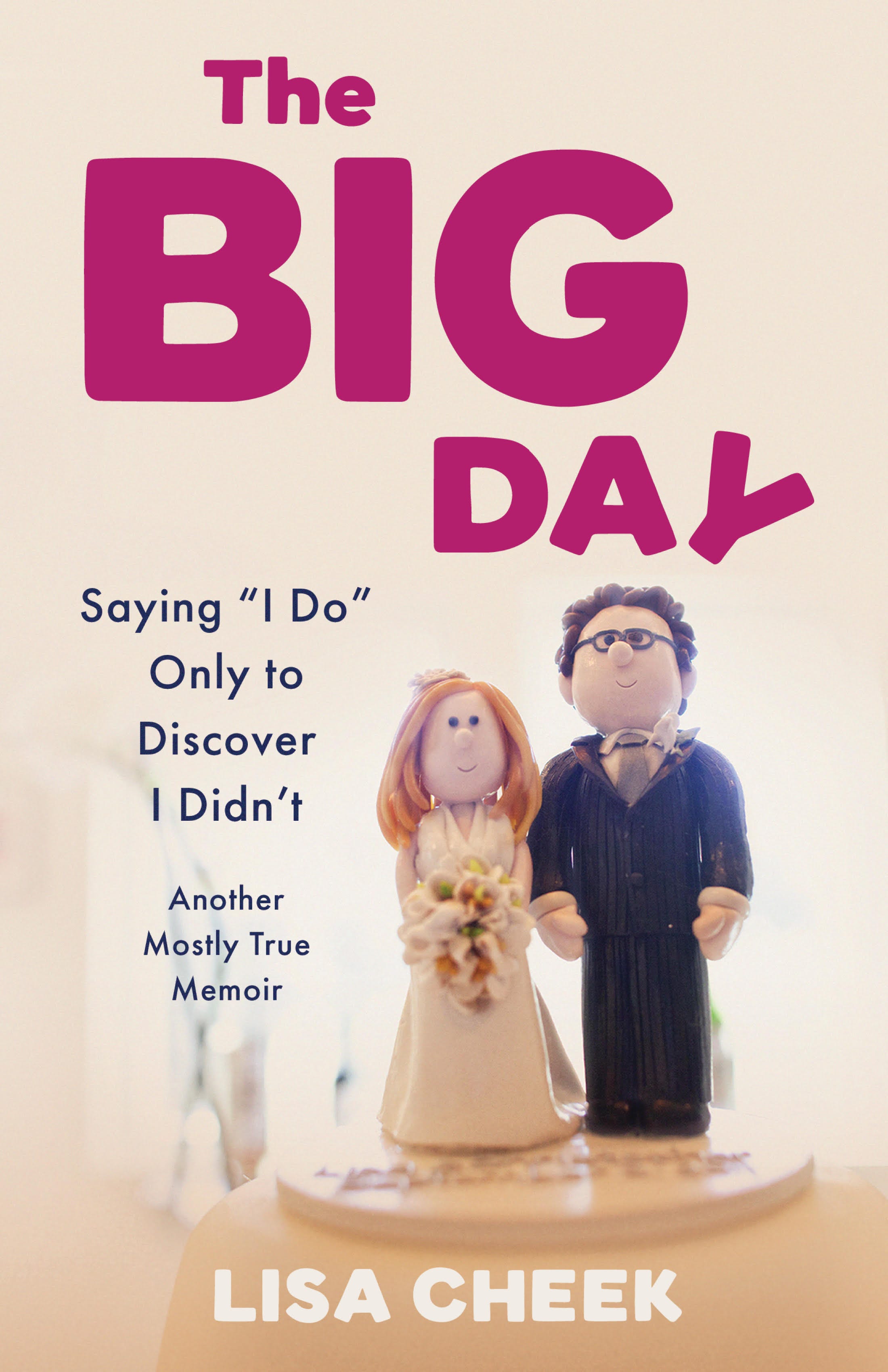
For fans of Sloane Crosley, another mostly true memoir from the acclaimed author of Sit, Cinderella, Sit about whether she’s finally ready for marriage before she turns fifty.
For years, Lisa Cheek believed commitment wasn’t in her genes. Her dating patterns were clear—date a lot and widely, but never settle down. When anyone wanted to marry her, she backed away. So even she is surprised when, at forty-nine, she finally says “yes” to a proposal and commits fully to her boyfriend, Big Johnson. But when she finds out on their wedding day, after the vows, that they aren’t actually married, she hesitates. Should she take this as a sign to run while she still can?
In The Big Day, Lisa Cheek invites us to witness her wedding day, with all its hilarity, chaos, and unexpected turns. Throughout, she reviews both her past relationships and the marriages of her family and friends, analyzing the choices of others and reliving the biggest ups and downs of her own love life. Ultimately, she must decide once and for all whether she’s just not marriage material—or if she’s finally found a love worth staying for.
Let’s dive in, shall we?
INTERVIEW
Jessica) How long did it take you to complete your memoir (from first words to publication)?
Lisa) I wrote my debut memoir, Sit, Cinderella, Sit, first as a novel because my writing teacher at that time said my story wouldn’t sell as a memoir. I spent two years writing that novel, but I never liked it. Then I attended a writer’s conference for women in Santa Fe where I met the woman who would become my editor who said, “Write it as a memoir.” She had written many memoirs, so I spent another year rewriting and editing with her and when I took back my story, owning it, I fell in love with it as a memoir. For me to say this really happened to me felt it was the only way to tell that magical story as well as my second memoir, The Big Day. They are such crazy, sweet, funny stories that I believe telling them as a memoir makes them that much more special.
J) Who were you when you began the book, and who are you now that it exists in the world?
L) When I started the book, I was a very insecure writer and rightly so. I had spent ten years on and off writing a different novel, the themes were similar but luckily I wouldn’t show it to anyone. Since that first MS I realized how much I needed to learn, so I’ve attacked classes like my life depended on it and I’ve improved. I love being in a class. Classes not only introduce me to other writers and teachers, it usually has deadlines and I need that most of the time to create.
J) Did publication give you a sense of arrival, or did it open a new kind of in-between?
L) When Brooke Warner said she wanted to publish my book I was thrilled, to say the least and it was the first person I asked if I had a book. I’d already began working on my next book hoping to build a stable of work to start showing someone, but when the first book got a green light, I decided to put the second book on hold while I learned about publicity and promotion and how to sell that debut memoir. I’m still learning how to get my book into readers hands as I begin to promote my second memoir, The Big Day. And the book business whether publishing or promoting is changing every day as traditional presses become conglomerates. Plus a plethora of new ways to promote pop up like substack, podcasts and newsletters.
J) Was there a memory you resisted writing because it felt unstable, unclear, or “not factual enough”? How did you work with that?
L) Not really, because I knew each scene that needed to be included in the book with the help of my editor. Once I knew there needed to be more childhood memories, I sat down and made a list of the ones I wanted to write and then figured out what China scenes the childhood memory best explained what I wanted to convey and then married them together. I felt the same with The Big Day. It was important to show my readers why I felt the way that I did whether through misinterpretations of events or just not knowing any better.
J) How did your understanding of “truth” in memoir change while writing this book?
L) What I learned as I wrote these two memoirs continues to changes as I delve deeper and deeper into the inciting incidents in my life. When it comes to the truth for me it’s my emotional truth. I remember very vivid moments in bits and pieces because of how I experience the situation at that time. I’m not always sure about exact facts but I can tell you what I was feeling and experiencing in the moments I write about. Truth for me is looking at that experience and trying to see it from how I may have misinterpreted things due to other past events or what I understood at the time of the event. And then there is always reflection. What I know to be the truth now when I make sense of the scene.
J) Did writing the book change how you relate to your past, or just how you speak about it?
L) It changed everything. I had no idea what a lonely child I was until I finished Sit, Cinderella, Sit. And how much I took on other people’s opinion of me. I don’t think I ever really saw myself until I uncovered what I really thought about myself through writing that book. I saw how brave I was to embark a trip to rural China to edit a film in Mandarin. And then, I eventually wrote a book about it and got it published. In my second memoir, The Big Day, I learned all about my family patterns and how it affected my behavior. I’m looking forward to discovering more as I embark on my third memoir.
J) What surprised you about yourself once the book was done and out in the world?
L) I felt seen for the first time. Readers expressed to me how grateful they were that I had written my book and that it gave them hope and joy and laughter and tears. It has given me connection to another human being. And that coming from a lonely kid is the best thing ever.
J) What do you wish someone had told you about the emotional experience of writing a memoir—not the craft?
L) You never know what you are going to discover, uncover, and learn about who and why you are the way you are until you write a book about it. Plus you get to meet the most interesting people along the way. I love other writers.
J) What advice would you give writers who are currently in the grey zone of their own memoir?
L) Write on! Find your community of writers. Take writing classes. Attend book events at your local bookstore. Buy books. Read voraciously. Go to writer conferences retreats, and literary festivals. You’ll have the best time.
FOLLOW LISA CHEEK
Find Lisa on her website, Instagram, and/or Facebook.
Buy Sit, Cinderella, Sit here.
Are you a published memoirist who’d like to be featured here? Hit reply and let me know.
If you know someone who’d like to be interviewed for The Grey Zone, please forward this email to them.
I loved Lisa’s book. Brooke Warner published both of our memoirs and like Lisa, I learned an lot about myself. Specifically, why I gave away parts of myself in order to be loved. Writing my memoir showed me that our voice is the most valuable power we have and with it, we can survive almost anything.
Jessica, thank you for giving me the opportunity to talk about my memoirs. I learn from everything I write. It's such an honor.